How to Choose a Reliable Car Garage in Nairobi: 10 Things to Check
Nairobi has hundreds of garages, from dealer workshops and independent specialists to roadside mechanics working out of a shipping container. Most drivers pick one the same way: a friend’s recommendation, or whichever is closest when something goes wrong. That works until it does not, and a bad garage choice rarely costs just the repair. It costs a second repair to undo the first, a part that fails early, or a problem that was never really fixed.
This guide gives you a practical checklist for choosing a reliable car garage in Nairobi: what to look for, what to ask, and the red flags that should send you elsewhere. We run Integra Motors Garage in Karen, so we have an obvious interest, but the checklist applies to any workshop you are considering, including ours.
The Short Answer
- A good garage diagnoses before it replaces, and gives you a written estimate before any work starts.
- It fits genuine or quality-assured parts, tells you which, and shows you the old parts it removed.
- It puts a warranty on its workmanship, in writing, on the invoice.
- It asks before doing extra work, and never hands you a bill bigger than the figure you approved.
The Four Kinds of Garage in Nairobi
Each type has a place. The right choice depends on your car, its age, and what it needs.
| Type | Strengths | Watch out for |
|---|---|---|
| Dealer or franchise workshop | Make-specific training and equipment, may be required under a new-car warranty | Highest labour rates, longer waiting times |
| Independent workshop | Multi-make experience, diagnostic equipment, lower cost than dealers | Quality varies widely, so the checklist below matters most here |
| Roadside mechanic | Cheap and convenient for simple jobs | No diagnostics, no warranty, parts of unknown origin, no record of work |
| Specialist (auto electrician, gearbox, AC) | Deep expertise in one system | Only useful once you know which system is at fault |
Roadside mechanics are an important part of Kenyan motoring and many are genuinely skilled. The issue is not skill but accountability: with no written estimate, no invoice and no warranty, you have nothing to fall back on if the repair fails. For anything beyond a simple job on an older car, that trade-off rarely works in your favour.
10 Things to Check Before You Hand Over Your Keys
1. They give you a written estimate first
A reliable garage inspects the car, tells you what it found, and gives you an estimate in writing before touching anything. A verbal “it will be around such and such” is not an estimate. If the garage cannot tell you roughly what the job costs until it is finished, walk away.
2. They diagnose with proper equipment
Modern cars store fault codes in their computers. A garage without a diagnostic scanner is guessing, and guessing usually means replacing parts one after another until the problem goes away, at your expense. Ask whether they will scan the car. A proper vehicle diagnostic check takes about an hour and is the cheapest step in any repair; at our workshop it starts from KES 1,000.
3. They tell you exactly which parts they fit
Counterfeit and substandard spare parts are a recognised problem in the region, and the Kenya Bureau of Standards runs standardisation marks for exactly this reason. A good garage names the part and its brand on the estimate, and uses genuine or quality-assured components sourced through legitimate channels. Be wary of a quote that is far below everyone else’s; the saving is usually in the parts.
4. They show you the old parts
Ask to see the parts that were removed. An honest garage does this without being asked. It is the simplest proof that a part was actually replaced, and a worn brake pad or a split bushing tells you more than any explanation.
5. They put a warranty in writing
A garage confident in its work will guarantee it. Ask what the warranty covers and for how long, and make sure it appears on the invoice. “Come back if there is a problem” is not a warranty.
6. They know your make
Japanese models dominate Kenyan roads, but European and commercial vehicles have their own systems, tools and quirks. Ask whether they regularly work on your make and model. A garage that sees your car every week will diagnose faster and fit the right parts first time.
7. The workshop is organised
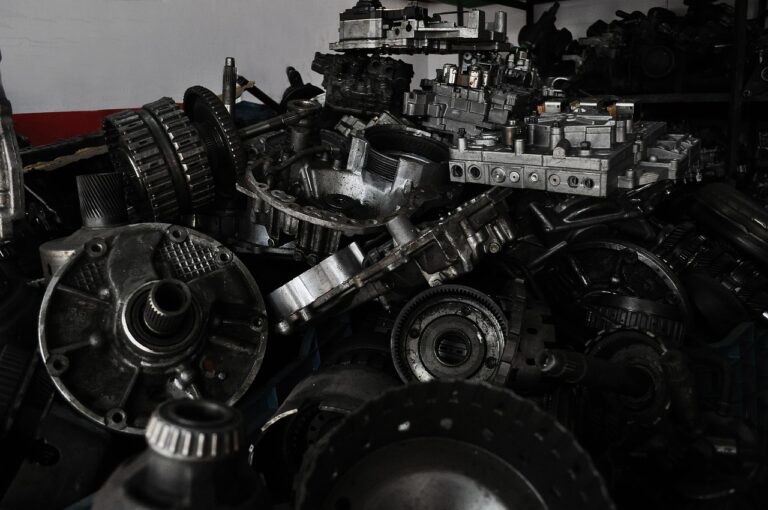
You can learn a lot in two minutes on the workshop floor. Proper vehicle lifts, labelled tools, a clean working area and cars parked with protective covers all point to a garage that takes care. Parts scattered everywhere and cars stripped for weeks point the other way.
8. The invoice is itemised
Your final bill should list each part, its price, and the labour charged. A single figure written on a scrap of paper gives you no way to check what you paid for, and no record for warranty claims or for the next buyer of your car. A full service history also protects your resale value.
9. Their reputation holds up
Read the garage’s Google reviews, but read them properly. Look for recent reviews, reviews that describe specific jobs, and how the garage responds to complaints. A handful of glowing five-star reviews with no detail is less reassuring than a longer record with the occasional honest criticism and a sensible reply.
10. They ask before doing extra work
Repairs sometimes uncover further faults. The difference between a good garage and a bad one is what happens next. A good garage calls you, explains what it found, and waits for your approval. A bad one does the work and adds it to the bill.
Red Flags That Should Send You Elsewhere
| Red flag | Why it matters |
|---|---|
| No written estimate | You have no agreed price to hold them to |
| Pressure to decide on the spot | Genuine urgent faults can be explained calmly and shown to you |
| Replacing parts without scanning | Guesswork repairs, paid for by you |
| Will not show the old parts | No proof the work was actually done |
| Price far below the market | The saving is almost always in counterfeit or used parts |
| Cash only, no invoice | No record, no warranty, no recourse |
| Car kept for weeks with no update | Poor organisation, or parts being sourced from elsewhere |
What a Proper Car Service Should Include
“Service” means different things at different garages, so ask what is included. At a minimum, a general vehicle service should cover:
- Engine oil and oil filter change, using the grade your manufacturer specifies (see our guide to synthetic vs conventional oil)
- Air filter inspection or replacement, which matters more than usual on dusty Kenyan roads
- Fluid checks and top-ups: coolant, brake fluid, power steering, washer fluid
- Brake inspection, including pad thickness and disc condition
- Tyre condition, tread depth and pressure check
- Suspension, steering and underbody inspection
- Battery, lights and warning light check
- A written report of anything that needs attention now or at the next service
A garage that changes the oil and calls it a full service is doing half the job. The inspection is where the real value lies, because it catches problems while they are still cheap.
How Long Common Jobs Take
Knowing typical times helps you judge whether a garage is being realistic. These are the approximate times at our workshop for straightforward jobs; complications or parts availability can extend them.
| Job | Typical time |
|---|---|
| Vehicle diagnostics | About 1 hour |
| Pre-purchase inspection | About 2 hours |
| Air conditioning service | About 2 hours |
| General vehicle service | About 3 hours |
| Brake system service | About 4 hours |
| Electrical and ignition repairs | Around 6 hours |
| Suspension, steering, or engine and cooling work | Up to a full day |
If a garage wants to keep your car for a week for a routine service, ask why. If it promises a complicated repair in twenty minutes, ask how.
Buying a Used Car? Use a Garage Before You Pay
The best time to find a good garage is before you buy the car, not after. An independent pre-purchase inspection checks the engine, gearbox, brakes, suspension, electrics and bodywork for hidden faults and accident repairs, and gives you a written report to negotiate with or walk away on. At our workshop it starts from KES 10,000, which is small against the cost of a bad purchase. Tyres alone reveal a lot about how a car was treated; our tyre guide explains what to look for.
Your Rights as a Customer
Garage customers in Kenya are protected by the Consumer Protection Act, and the Competition Authority of Kenya handles consumer complaints where a business will not put things right. Keeping your written estimate, itemised invoice and payment record is what makes a complaint possible, which is one more reason to insist on them. Separately, roadworthiness standards for vehicles are set by the National Transport and Safety Authority, and a good garage can tell you whether your car would pass.
How We Apply This Checklist at Integra Motors
We wrote this checklist, so it is fair to hold us to it. At our workshop opposite Galleria Mall in Karen, every job starts with an inspection and a written estimate, and nothing is done without your approval. Our factory-trained technicians use diagnostic equipment rather than guesswork, we fit genuine parts and name them on the invoice, we show you what we replaced, and our workmanship carries a written warranty, as set out in our terms of service.
We service Toyota, Honda, Nissan, Subaru, Mazda, Mitsubishi, Isuzu, Mercedes-Benz, BMW, Volkswagen, Audi, Ford and Land Rover, plus commercial vehicles, and we stock genuine spare parts with delivery across Kenya. See the full list of garage services we offer.
Frequently Asked Questions
How much does a car service cost in Nairobi?
It depends on the make, the engine, the oil it takes and what the inspection finds, which is why a reliable garage quotes after checking the car rather than offering one price for every vehicle. Be cautious of flat prices far below the market. At Integra Motors, diagnostics start from KES 1,000 and general services are quoted per vehicle before any work begins.
How often should I service my car in Kenya?
Follow the interval in your owner’s manual, but treat most Nairobi driving as severe service: dust, stop-start traffic and short trips all age oil and components faster. For many cars that means a service every 5,000 to 10,000 km or every six months, whichever comes first.
Are roadside mechanics safe to use?
Many are skilled, and for a simple job on an older car they can be fine. The risk is accountability: no diagnostic equipment, no written estimate, parts of unknown origin and no warranty. For safety systems such as brakes and steering, or anything on a newer car, a workshop that stands behind its work is the safer choice.
Do I have to service at the dealer to keep my warranty?
Check your warranty terms. Some manufacturer warranties only require that the car is serviced on schedule with correct-specification parts and that the work is documented, while others require dealer servicing. If your car is under warranty, read the conditions before choosing an independent garage.
How can I tell if a spare part is genuine?
Look for correct manufacturer branding and part numbers, intact and well-printed packaging, and standardisation marks where they apply. Be wary of prices far below the market. The simplest protection is buying from, or having parts fitted by, a supplier who names the part on the invoice.
Where can I find a reliable garage in Karen, Nairobi?
Integra Motors Garage is opposite Galleria Mall in Karen, Nairobi, open Monday to Friday 8:00 AM to 6:00 PM and Saturday 9:00 AM to 5:00 PM. Call +254 748 813 909 or book online.
Choose Once, Choose Well
A reliable garage is not the cheapest quote or the nearest workshop. It is the one that diagnoses properly, prices in writing, fits genuine parts, shows its work and stands behind it. Find one that passes this checklist and you will spend less on your car over its lifetime, not more.
If you would like to put us to the test, book a service online or talk to our team. And if your car is showing warning signs right now, start with our guide to the 5 signs your brakes need immediate attention.